Blog
Are Vinyl Boat Stickers Better Than Painted Lettering?
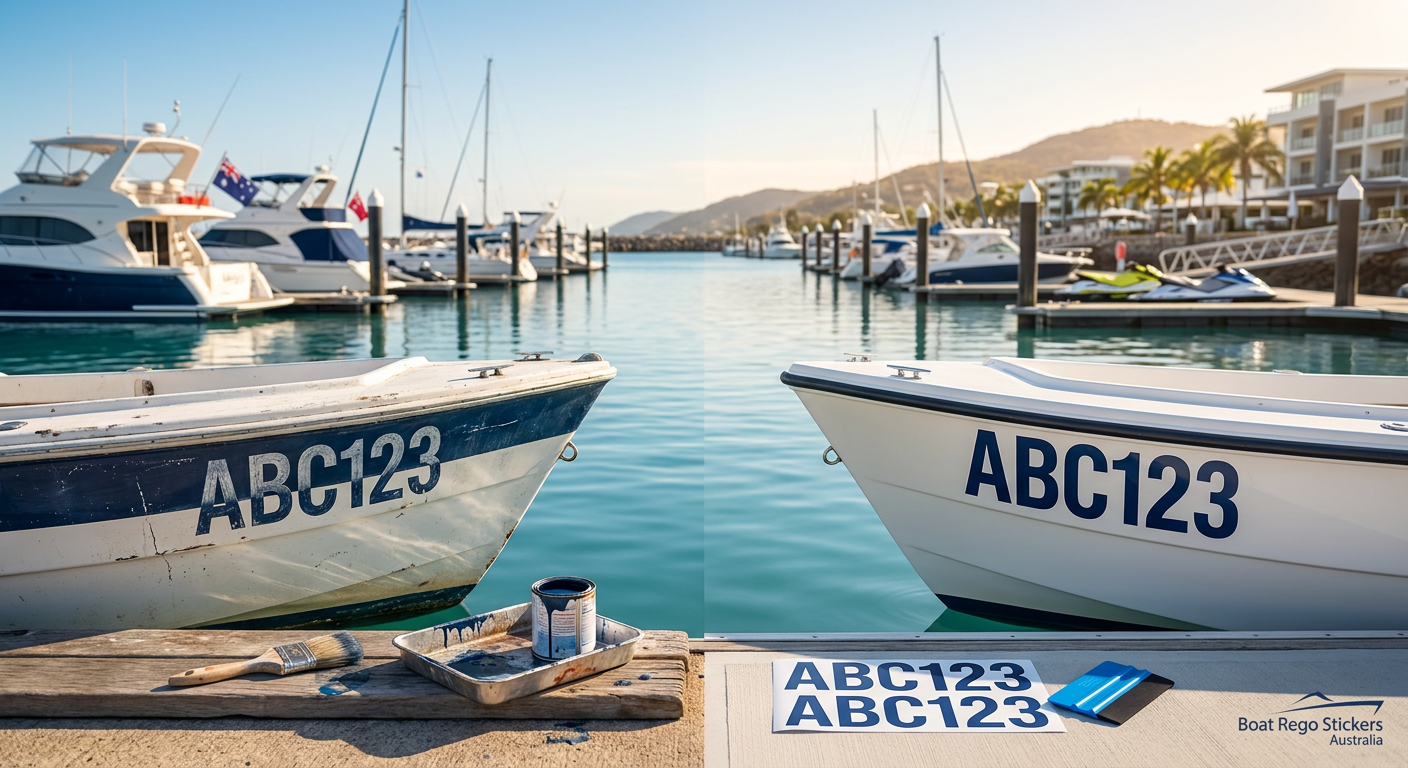
When it comes to displaying your vessel's identity, Australian boat owners generally face two choices: the traditional artistry of hand-painted lettering or the modern precision of marine vinyl decals. While signwriting was once the gold standard on Australian waterways, the shift toward high-quality vinyl has been driven by advancements in material science and ease of application.
Durability in Harsh Australian Conditions
Australian boaters deal with some of the harshest marine environments in the world. From the intense UV radiation of QLD to the saltwater spray of the Bass Strait, your registration numbers need to withstand significant punishment. Modern custom boat registration stickers manufactured from premium German-engineered ORAFOL vinyl are specifically designed for these conditions.
Unlike paint, which can chip, fade, or crack over time as the hull expands and contracts with temperature changes, marine vinyl remains flexible. Professional-grade vinyl is rated for years of marine exposure, maintaining its colour and adhesion even through high-pressure washdowns and saltwater immersion.
Cost and Time Efficiency
Hiring a traditional marine signwriter for hand-painted lettering is a significant investment. It often requires the boat to be out of the water for several days to allow for prep work, multiple coats, and drying time. This process is not only expensive but keeps you off the water.
Conversely, you can design your boat rego online and have it delivered to your door, ready for application. Using pre-spaced decals on application tape makes the DIY process straightforward. Most owners can apply a pair of rego stickers in under 20 minutes, as detailed in our guide on how to apply boat rego stickers.
Ease of Removal and Resale
One of the biggest advantages of vinyl over paint is reversibility. If you decide to sell your boat or change its name, removing painted letters usually involves sanding the gelcoat and repainting the area. This can be a nightmare for a PWC or Sea-Doo owner who wants to maintain the vessel's resale value.
Using marine-grade sticker removal techniques, vinyl can be peeled off without damaging the underlying surface. This allows you to update your jet ski registration stickers or boat name quickly whenever necessary.
Ensuring Legal Compliance
In Australia, registration numbers must meet specific height and contrast requirements. For example, most states require a minimum character height of 150mm for boats and 100mm for PWCs. When painting by hand, achieving these exact measurements and ensuring the font is perfectly legible can be difficult.
When you order through a specialist, the stickers are cut to the exact millimetre required by your state maritime authority. You can find specific rules for your region on our boat registration requirements Australia page.
Frequently Asked Questions
Do vinyl stickers peel off in saltwater?
No. When applied correctly to a clean, wax-free surface, marine-grade vinyl is waterproof and designed specifically for permanent immersion and saltwater exposure.
Can I pressure wash vinyl decals?
Yes, though we recommend keeping the nozzle at a reasonable distance and avoiding direct 90-degree blasts against the very edges of the letters to ensure maximum longevity.
Is paint more 'premium' than vinyl?
While paint has a classic look, high-end outline boat rego stickers and metallic finishes offer a modern, professional aesthetic that is often indistinguishable from high-end paintwork once applied.
The Verdict
While hand-painting still has a place in the restoration of classic wooden vessels, modern vinyl stickers are the superior choice for the vast majority of Australian boat and jet ski owners. They offer better durability, lower costs, and the flexibility to change your vessel's look without damaging the hull.
Ready to update your vessel? Use our online sticker designer to create a compliant, professional look for your boat today.
Compliance Disclaimer: Rules vary by state and territory. Always confirm current requirements with your state maritime authority. Final compliance depends on correct size, placement, contrast, and display on the vessel.